
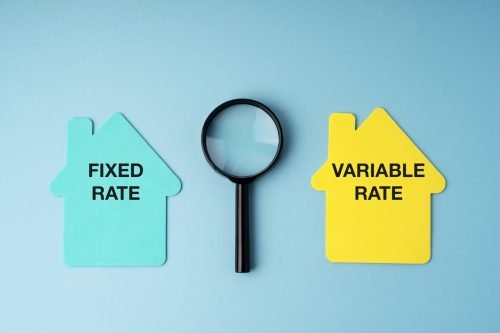
Brokers say clients are reluctant to give up their lower variable rates, even with further hikes possible.
The Bank of Canada’s first rate hike in more than three years has given variable-rate mortgage borrowers a reason to reconsider their choice. But locking in now would mean paying a higher rate to protect against increases that may or may not come.
Fixed mortgage rates had already climbed in the weeks before the Bank’s quarter-point hike on Oct. 28. Even with further hikes possible, brokers who spoke with Canadian Mortgage Trends say few clients are looking to switch.

“They’ve already accepted the risk that there will be changes in the rate, and for the most part, nobody panics when it does,” says Dave Larock of Integrated Mortgage Planners. “I haven’t had anyone suddenly say they want to switch to fixed — or even ask what the fixed rates are.”
Larock says borrowers already feeling squeezed by the quarter-point hike could face a bigger payment increase if they lock in at a higher fixed rate.
“People who have appropriately chosen variable have done so as a long-term strategy,” Larock says. “If they’re going to lock into a fixed rate after the BoC’s first hike in more than three years, that doesn’t align with the thinking that put them into variable in the first place.”
When does locking in add up?
When the Bank of Canada began raising rates in March 2022, fixed mortgage rates were already higher than variable rates. As the Bank continued hiking, variable rates eventually caught up to and overtook fixed rates.
A Bank of Canada hike can narrow the gap between fixed and variable mortgage rates, but it depends on what happens to fixed rates in the meantime. The same inflation pressures that can prompt the Bank to raise its policy rate can also lift bond yields, pushing fixed mortgage rates higher. Several lenders had already raised fixed rates by the time the Bank moved on Oct. 28.
“I don’t think we’ll ever get parity again,” Larock says. “The bond market is more sensitive to changes in the outlook, so, if the BoC felt like there was enough inflation pressure to hike four more times, the bond yields — which fixed rates are priced on — would have risen probably by more.”
For variable-rate borrowers weighing whether to lock in, the question is whether future hikes would be large enough and last long enough to make a fixed rate cheaper over the rest of their term.
“Even if the Bank of Canada hikes another four or five times it’s reasonable to think that at some point there will be cuts on the other side,” Larock says. “It’s the average cost of variable over those five years that borrowers are considering, not what’s the best deal for the next 12 to 18 months.”
Some borrowers are weighing a switch
Even if they stand by their choice, some borrowers are having second thoughts as their mortgage costs rise.

Clinton Wilkins of Clinton Wilkins Mortgage Team says some recent borrowers have asked about fixed rates since the hike, only to find that locking in would mean paying a higher rate than they’re paying now.
Wilkins adds that he warns variable-rate borrowers about the prepayment penalty they could face if they break a closed fixed-rate mortgage early, whether their circumstances change or they want to take advantage of lower rates.
“Part of the reason why borrowers are willing to roll the dice right now is not just having a significantly lower cost of borrowing today but having that extra flexibility of being able to convert and or break the mortgage in the future,” he says.
For some borrowers, though, knowing what they’ll pay each month is worth a higher rate.
“This is a time of volatility,” says David Van Noppen of More than Enough Financial. “If you want the security (of a fixed rate) then it’s less of a financial decision and more of an emotional decision — I’d like to sleep at night so I’m taking the fixed rate.”

Van Noppen’s clients, it seems, aren’t losing much sleep. He estimates about 70% have variable-rate mortgages, yet he hasn’t had a single call from a client looking to lock in since the Oct. 28 hike.
He encourages clients who choose a variable rate to top up their payments to match what they would have paid on a comparable fixed-rate mortgage at the time of purchase.
“That creates that hedge in payment, where now they’re accelerating their payment down and essentially taking full advantage of the lower variable rate while not paying any more than they would have if they had gone to a fixed rate,” he says.
That strategy can give borrowers some breathing room if rates rise. If the gap between variable and fixed rates narrows, however, Van Noppen expects the phone to start ringing. “When we see a quarter point spread between the client’s current variable rate and the current fixed rate that they can pivot into on a switch or even on a lock-in then yeah, we will start talking to them about it.”
Visited 5 times, 5 visit(s) today
Clinton Wilkins Dave Larock david van noppen fixed mortgage rates fixed vs. variable interest rates mortgage market trends mortgage rate trends mortgage strategies rate trends variable mortgage rate
Last modified: November 4, 2026
